
The following was published by Livewire, 22nd June 2026. | Author: Keith Ford
Kapstream’s Mark Bayley explains how fixed income has become a genuine return driver.
If you’ve been paying attention to fixed income over the past couple of years, you’ll know the narrative has shifted dramatically. For a long time, investors have seen bonds as the ballast you held to offset equity risk, not something you actually got excited about.
That story has now changed, with rising rates handing income investors genuine yield. Alongside this, it has given renewed reason to take fixed income seriously on its own terms.
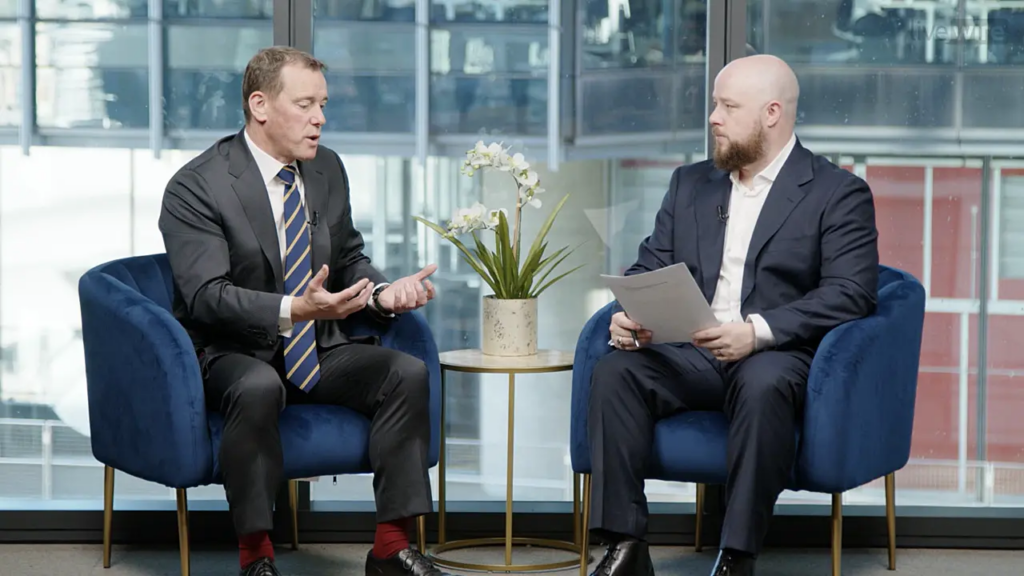
In the interview below, I sat down with Mark Bayley, portfolio manager at Kapstream Capital, to talk through how the team is navigating a market that’s been anything but quiet.
From the Iran-driven oil price shock and its inflationary ripple effects, to the surge in new issuance from AI hyperscalers, there’s no shortage of moving parts for fixed income investors to contend with right now.
However, Bayley’s view is that volatility has created as many opportunities as it has risks if you have the right framework to exploit them.
“Fixed income investors are actually getting yield and getting return,” he says.
“That’s not just to balance out the risks of equity, but it’s a significant part of their portfolio that’s actually generating yield and return.”
It’s a simple point, but it captures something important about where we are in the cycle.
A mindset shift in fixed income
The backdrop to this conversation is a fixed income market that looks very different to the one investors navigated through most of the 2010s. In mid-May, 30-year US Treasury yields climbed to their highest level in almost two decades, and are now sitting at around 5% on the back of persistent inflationary pressure and the Iran war’s effect on oil prices.
Central banks have started to move and the RBA has raised rates three times this year alone.
For Bayley, the consequence has been a fundamental rethink among investors about what fixed income is actually for.
“Investors are now looking at fixed income as not a balancing for the riskier equity portfolio, but also it’s actually a genuine return driver for their portfolios given the higher absolute yields that you’re seeing,” he says.
“That’s been a mindset switch that we’ve seen in the last 18 months to two years.”
Global fund flow data backs this up. Inflows into both investment grade and high yield strategies have been strong since the start of the year.
“We’ve certainly seen that in our funds and across our various different strategies. We’ve seen strong growth rates coming through and fund inflow since the start of the year,” Bayley says.
Selectively adding to credit
Bayley explains that the team has shifted the portfolio’s characteristics toward slightly lower-rated, shorter-dated bonds, based on back-testing that showed this combination produces more optimal outcomes than higher rated bonds on a longer time scale.
“We’ve slightly changed the portfolio dynamics and the characteristics to be more BBB+ to A- characteristics,” he says.
They also reduced the bond duration from around seven years down to three years, with the combination creating a “more optimal outcome in terms of returns going forward”.
Kapstream has subsequently been selectively adding to credit risk as opportunities arise.
The recent volatility around the Iran situation caused new issuance to pause briefly, which then opened up opportunities when and that pause created an opening.
“There were higher new issue concessions. Companies were paying higher premiums to come to the market and we took opportunities there,” Bayley says.
Kapstream’s US operation added another dimension to this, giving the team access to a new issuance market where concessions are paid more frequently and at higher levels than in Australia.
Sell first, ask questions later
Capital preservation is the bedrock of Kapstream’s investment philosophy, Bayley adds, describing the portfolio’s mantra as: “You’re only meant to keep the lights on, not shoot them out.”
The risk management approach that underpins this is deliberately aggressive.
“When we see problems with bonds, which doesn’t happen that much, it’s sell first, ask questions later,” he says.
“I’ve traded high yield in previous roles and those bonds can rapidly move down from 95 cents in a dollar to 80 cents and then there’s kind of a big gap to 40 cents in a dollar.
“I know that it’s important to act quickly when you start to see problems in the portfolios. That’s certainly Kapstream’s mentality.”
Alongside this, Kapstream uses credit default swaps to hedge positions and limit left-tail outcomes. The aim is to cut off the worst of the downside before it compounds.
Liquidity as a competitive edge
Liquidity management is an area where Bayley believes Kapstream has a genuine structural advantage through its “fairly unique way of looking at bonds”.
The team ranks all bonds on a four-level liquidity scale, with level one being the most liquid, and since COVID has deliberately increased the portfolio’s weighting toward level one and two assets.
The logic is essentially that maintaining high liquidity allows the fund to act as a liquidity provider rather than a liquidity taker in times of stress.
“If we have the liquidity to buy bonds that are really good fundamental bonds that have been sold by a forced seller for whatever reason, we can capture that additional premium, that lower bond price for those assets and capture that return for our investors,” Bayley explains.
“We realise that the liquidity framework that we offer to investors is critically important and a very key part of our way of thinking in terms of returns and additional returns for investors.”
Future looking strong
Looking ahead, Bayley sees a roughly 6% forward yield as a reasonable base case for income investors.
On the flipside, he notes that credit spreads in the US are near historical lows and “not offering attractive value”.
“We’re actually seeing a lot more opportunities in the Australian corporate credit market,” Bayley adds, thanks to credit spreads sitting slightly below long-term historical averages.
“That’s where our portfolio is slanted. It has the ability to go more global, but at the moment it’s very much focused on the Australian credit market.
“We think probably around about 6% looking forward, no guarantees obviously, but that’s probably a good target for investors to think about for the next 12 to 24 months.”
For investors who have spent years waiting for fixed income to deliver, that’s not a bad place to be.
This material has been prepared by Kapstream Capital Pty Limited (ABN 19 122 076 117 AFSL 308870) (Kapstream). It is general information only and is not intended to provide you with financial advice or take into account your objectives, financial situation or needs. To the extent permitted by law, no liability is accepted for any loss or damage as a result of any reliance on this information. Any projections are based on assumptions which we believe are reasonable but are subject to change and should not be relied upon. Past performance is not a reliable indicator of future performance. Neither any rate of return nor capital invested are guaranteed.