


Kapstream Absolute Return Income Plus Fund
The Kapstream Absolute Return Income Plus Fund aims to deliver a steady stream of income, with enhanced return potential and medium-term capital stability, through an alternative approach to fixed income investing.
Fund Overview
The Kapstream Absolute Return Income Plus Fund (the Fund) is an actively managed, absolute return fixed income strategy that aims to deliver a superior stream of income while maintaining capital stability over the medium to long term. The Fund aims to outperform the RBA Cash Rate across market cycles, with a strong emphasis on risk management and low volatility outcomes.
Quick Links
Fund Features
Enhanced returns and regular income
The Fund aims to enhance overall fixed income returns via a higher yielding, predominantly investment grade portfolio to deliver a superior stream of income
Capital stability
Aims to generate returns above the RBA Cash Rate while minimising downside risk, rather than tracking traditional fixed income indices
Global diversification
A global, diversified portfolio of predominantly investment grade fixed income securities
Unconstrained approach
Investing wherever the best risk-adjusted opportunities can be found irrespective of the benchmark index
Fund Characteristics & Performance
Fund Characteristics
| Fund | Kapstream Absolute Return Income Plus Fund |
| Objective | The Fund aims to provide a superior stream of income and capital stability over the medium term while aiming to outperform its benchmark through market cycles |
| Benchmark | RBA cash rate |
| Inception date | 6 November 2019 |
| Distribution frequency | Quarterly |
| Minimum investment | $10,000 or $1,000 when a Regular Investment Plan is established |
| Management fee | 0.60% p.a. |
| APIR code | HOW5504AU |
Performance (after fees) as at 30 September 2026
| Kapstream Absolute Return Income Plus Fund | 1 month | 3 months (%) | CYTD (%) | 1 year (%) | 3 years (% p.a.) | 5 years (% p.a.) | Since inception (% p.a.) | ||
|---|---|---|---|---|---|---|---|---|---|
| Fund Return | 30 September 2026 | 0.09 | 0.96 | 3.22 | 4.73 | 6.88 | 5.19 | 4.09 | 3 |
| RBA Cash Rate | 30 September 2026 | 0.35 | 1.08 | 3.08 | 4.00 | 4.13 | 3.29 | 2.45 | 4 |
| Active Return | 30 September 2026 | -0.26 | -0.12 | 0.14 | 0.73 | 2.75 | 1.90 | 1.64 | 5 |
| Ausbond Bank Bill Index | 30 September 2026 | 0.36 | 1.11 | 3.13 | 4.06 | 4.21 | 3.34 | 2.49 | 6 |
Past performance is not a reliable indicator of future performance.
1 Net of fee returns inclusive of 0.60% annualised total expenses. No allowance is made for tax. Numbers may not add due to rounding.
Data Source: Fidante Partners Limited
Resources
How to Invest
Before making a decision about whether to make an investment or additional investment in one of our funds please read the Fund’s Target Market Determination (TMD), Product Disclosure Statement (PDS), Additional Information Booklet and Product Updates to ensure the key attributed of the fund as described in the TMD and PDS aligns with your objectives, financial situation and needs.
Portfolio Managers

Daniel Siluk
Managing Director & Portfolio Manager

Dylan Bourke
Managing Director & Portfolio Manager
Fund Ratings
The Fund has received a ‘Recommended’ rating — from Lonsec Research and Zenith.
For more information, please read the Ratings Disclaimer.

Latest News & Insights

Ausbiz | Private credit’s pressure test as yields rise
Mark Bayley joins ausbiz to discuss the outlook for private credit and how rising yields are reshaping risks and opportunities for investors.

Ausbiz | Where to invest in fixed income as rates rise
According to Dylan Bourke higher interest rates and sticky inflation are reshaping the fixed income landscape, with investors facing greater volatility in traditional income strategies.

Quick View: Fed chooses to pay now rather than pay more later
Daniel Siluk explains why he believes that, while a rate hike and a hawkish stance were merited given strong U.S. economic performance, other sources of volatility require bond investors to maintain cautious positioning.
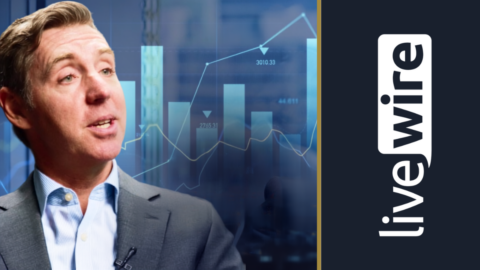
Why Kapstream’s Dan Siluk says the “old normal” is back
In this Livewire interview, Daniel Siluk discusses the outlook for fixed income, the impact of ongoing AI-driven investment spending, and why income opportunities in bond markets remain compelling.
